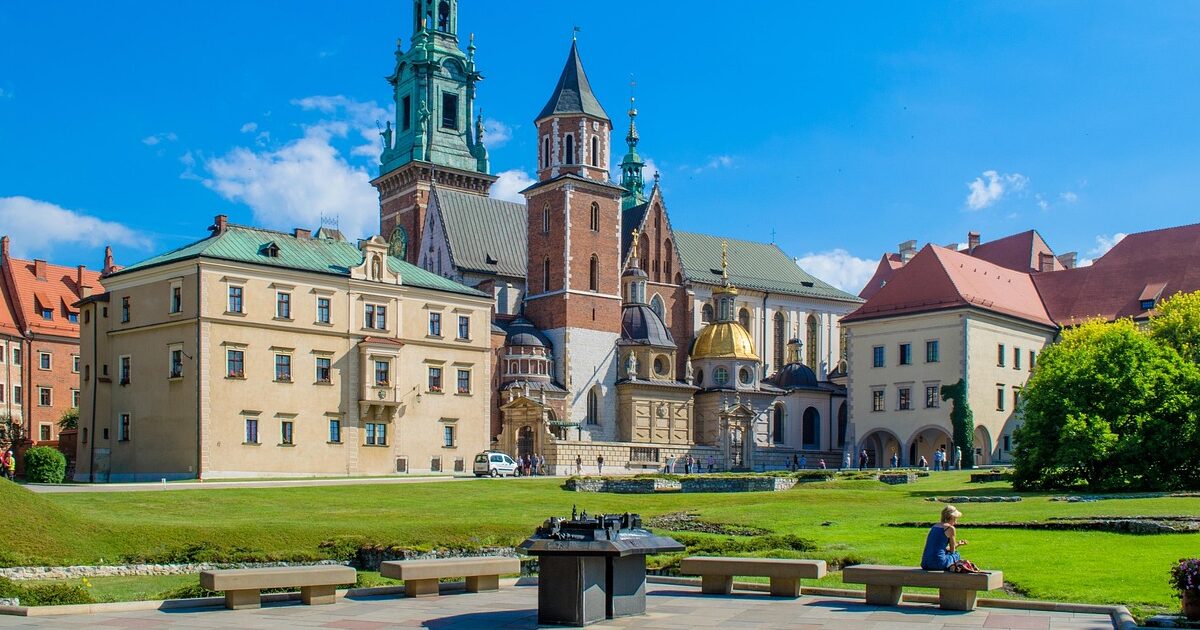
Beneath the stunning architecture of Krakow, lies a history of unimaginable importance. This city witnessed some of the darkest chapters in human history.
But Kraków is a city of resistance and hope. Where the polish spirit refused to be broken by the cruelty of World War II.
Let’s take a deep dive on Krakow’s history and some of the best attractions to visit today!
A Thriving Jewish Community Before the War
Kraków was home to one of the biggest Jewish communities in Europe. By the early 20th century, the city had a Jewish population of around 70,000 people. Which is about 25% of Kraków’s total population.
The Kazimierz district was the heart of Jewish culture in Kraków. The district was a mix of Polish, Yiddish, and Hebrew.
What made Kraków’s Jewish community unique?
The Jewish community fully adjusted to Polish culture and enhanced it in the best way possible. Some of Europe’s most influential rabbis and scholars were there. Jews played a huge role in the city’s economy, running businesses, banking, and contributing to arts and sciences. But in 1939, all of this changed.
The Outbreak of War: How WWII Began for Kraków
Germany started World War II by invading Poland on September 1, 1939, using her military force. Their attacks targeted key communication areas, transportation routes, and military installations. Their aim was to weaken the Polish defenses.
One of the first targets was Kraków. The city was known for her historical significance and strategic importance. The Polish Army fought bravely. But the Greman army used all their means. Air strikes, fast-moving tanks, and ground troops being some of them.
Within days, Polish forces were overwhelmed, struggling to hold their defensive lines. To prevent the worst case scenario, the military withdrew from Kraków. This allowed the German forces to march in on September 6, 1939.
The Fall of Kraków and the Suppression of Polish Culture
The city was turned into the administrative capital of the “General Government,” ruled by Hans Frank. Polish officials were stripped of power, and the city became a central hub for Nazi operations.
The crackdown was swift and ruthless. Polish leaders were executed and independent newspapers were shut down. Their main goal was to erase the Polish culture once and for ever. And this is when the Sonderaktion Krakau happened. On November 6, 1939 the Gestapo arrested 183 professors from Jagiellonian University. They were all sent to concentration camps and many of them never returned.
This was their way of erasing the Polish culture. Taking the power out of the people who has since then, been a part of the culture and created it.
Kraków: The Capital of Nazi-Occupied Poland
In late 1939, after the German invasion of Poland, Kraków was chosen as the administrative center of Nazi-occupied Poland. Unlike Warsaw, which suffered immense destruction, Kraków remained mostly intact. But its survival was not easy.
Hans Frank, one of Hitler’s top officials, moved into Wawel Castle. The castle was turned it into his personal headquarters, living in luxury. But this was not the case for the Polish population. The German’s imposed harsh policies.
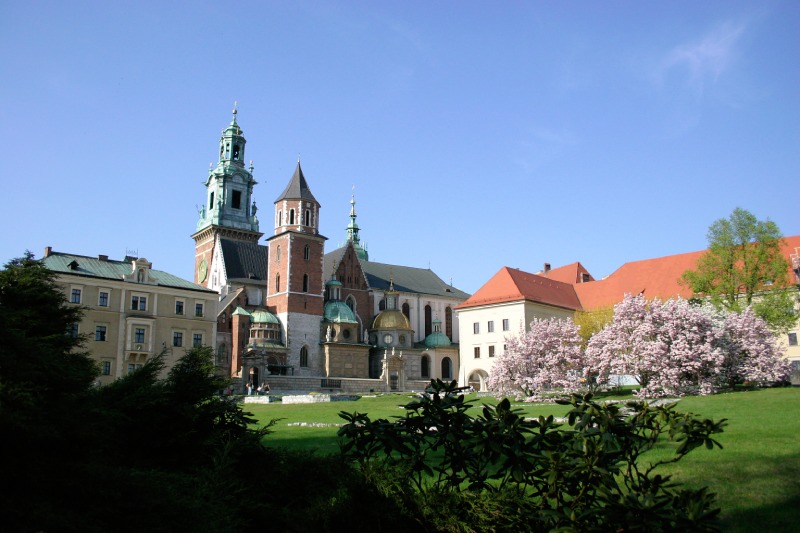
They aimed at erasing Polish identity, enslaving the local population, and exterminating the Jewish community. Frank envisioned a city purely for Germans, systematically removing those who didn’t fit in their ideal.
The Germanization of Kraków and Persecution of Polish Citizens
And this is where the downfall of Poland began. Street names were changed to German, businesses were shut down, and tens of thousands of Polish residents were deported to make room for Germans. The city’s universities were shut down, and intellectuals including professors, doctors, and artists were either imprisoned or executed.
The press was silenced, and even speaking Polish in public was discouraged. The Gestapo operated with uncontrolable power. Arresting or executing anyone suspected of resistance was an every day activity. Daily life became a nightmare. There was food shortages, and constant surveillance which turned the city into a place of fear and oppression.
The Kraków Ghetto: Life and Death in Nazi-Controlled Kraków
Kraków’s Jewish community, which had thrived for centuries, was immediately targeted. In 1941, the Nazis created the Kraków Ghetto in the Podgórze district. Thousands of Jewish residents were relocated into a small, walled-off section of the city. Overcrowded, starvation and disease, was what described this place.
Many Jews were forced into slave labor, working in Nazi-run factories, including Oskar Schindler’s Deutsche Emailwarenfabrik, where a few found a rare chance of survival. But by mid 1942, mass deportations to extermination camps like Bełżec and Auschwitz-Birkenau began.
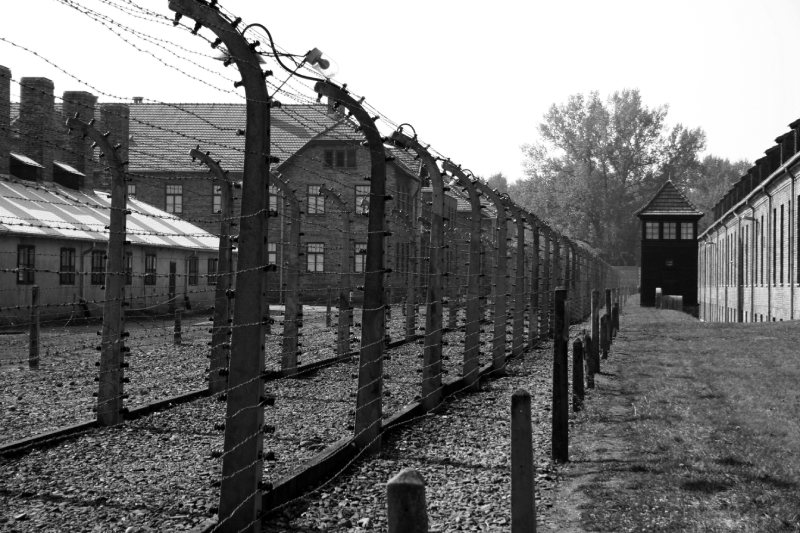
The final liquidation of the Kraków Ghetto took place in March 1943. The remaining Jewish residents were either executed in the streets or deported to concentration camps. Today, Plac Bohaterów Getta (Ghetto Heroes Square) serves as a haunting memorial. It symbolizes the lives lost and the belongings left behind by those sent to their tragic fate.
The Liberation of Kraków: How the City Was Freed
A City on the Brink: Kraków in Early 1945
By early 1945, World War II was in its final, brutal phase. Germany was collapsing, losing ground on all fronts. In the east, the Soviet Red Army was advancing relentlessly, steamrolling through Poland. For the people of Kraków, this was both a moment of hope but also deep uncertainty.
On one hand, liberation from six years of brutal Nazi occupation was finally within reach. On the other, Soviet “liberation” had its own dark reputation. Just months earlier, Warsaw had been obliterated—first by the Germans crushing the Polish uprising. Then by their systematic destruction of the city before retreating. Would Kraków suffer the same fate?
The city was liberated without major destruction. Unlike Warsaw, Kraków was not reduced to rubble. But why?
Why Didn’t the Germans Destroy Kraków?
The answer lies in a mix of luck, speed, and some unusual decisions by the people in power at the time.
1. The Germans Didn’t Have Time
The Soviet Vistula-Oder Offensive, launched on January 17, 1945, was a massive assault that destroyed German defenses across Poland. The Red Army advanced with unbelievable speed, catching the Nazis off guard.
By January 18, Soviet forces were already at Kraków’s doorstep. The German retreat was so sudden that they had no time to carry out their planned policy, which was their usual tactic—leaving nothing behind for the enemy.
2. Hans Frank’s Personal Interest in Kraków
Hans Frank, the Nazi Governor of the General Government had ruled from Wawel Castle, turning the historic royal seat into his personal headquarters. He saw Kraków as a prestigious German city, one worth preserving. Unlike Warsaw, which had resisted German rule through multiple uprisings, Kraków had remained relatively stable under occupation.
There is no clear record that Frank explicitly saved Kraków, but his personal attachment to the city likely played a role in it surviving the German retreat.
3. The Red Army Moved Too Fast for Sabotage
The Soviets outmaneuvered the Germans, cutting off their escape routes before they could destroy key sites. The Nazis had used large-scale destruction before, but in Kraków, they simply ran out of time.
Krakow was set free: January 19, 1945
By January 18, 1945, the Germans had fully abandoned the city, following west. On January 19, 1945, Soviet tanks rolled into Kraków. There was no prolonged battle, no last stand by retreating Nazi forces. The city, against all odds, was liberated intact. For Kraków’s residents, the nightmare of Nazi rule was over.
The Aftermath: A Bittersweet Victory
Unlike Warsaw, which suffered an almost total destruction, Kraków’s historic buildings, churches, and castles survived. This is why today, Kraków still looks like a medieval jewel, rather than a city rebuilt from rubble.
However, for the people of Kraków, this was a bittersweet victory. Soviet control brought new challenges, as Poland found itself under communist rule for the next four decades. They faced political oppression and economic hardships under Soviet influence.
Oskar Schindler and His Factory: A Story of Courage and Humanity
I already mentioned his factory but his story and courage must be discussed further.
Who Was Oskar Schindler?
If you’ve seen Schindler’s List, you might think you know Oskar Schindler’s story. But the real man behind the legend was even more complex.
Oskar was born in 1908 in what is now the Czech Republic. He was a businessman and a man who knew how to turn the rules to his advantage. When the invasion occured he saw an opportunity. He moved to Kraków, took over an enamelware factory, and hired Jewish workers because they were cheaper. At this point his main goal was profit.
But as Schindler witnessed the brutality of the Nazi power he made a choice. Instead of doing nothing, he decided to fight back in the only way he could: by saving lives.
Schindler’s Factory
Schindler’s factory, Deutsche Emailwarenfabrik (DEF), became a lifeline for Jewish workers.
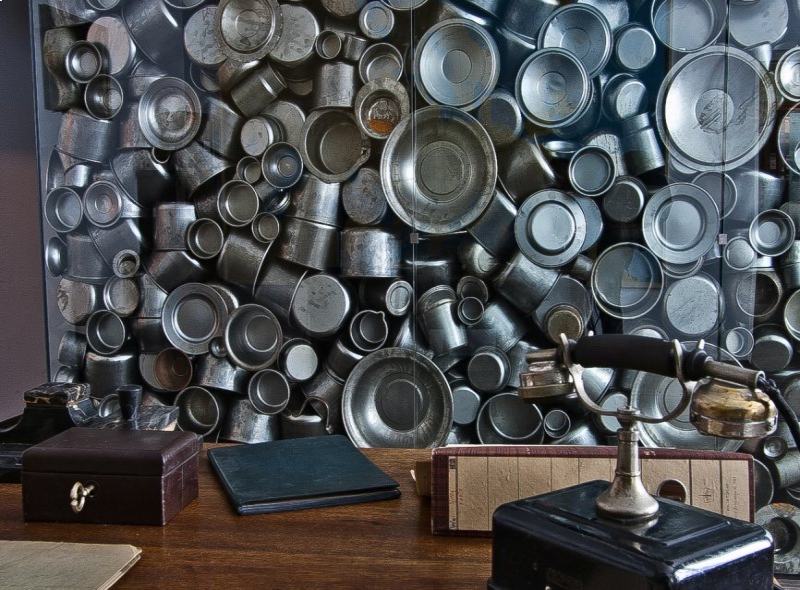
The Schindlers plan was the following. He wanted the Nazi authorities to believe that his workers were “essential” to the war effort. This essentialy meant that they couldn’t be deported.
Oskar used to manipulate prodyction reports, bribe the Nazi officials with gold and alcohol so that they were silent.
But the real test came in 1943, when the Kraków Ghetto was liquidated. Rather than abandon his workers, he took a dangerous gamble. He used his personal fortune to bribe Göth (Nazi officer), arguing that his Jewish workers were skilled and necessary for the war industry.
But as the war neared its end and Auschwitz became the Nazis’ primary killing center, Schindler took one final risk. He created “Schindler’s List”. A list of 1,200 Jewish men, women, and children whom he claimed were essential for a new factory in Brünnlitz (in present-day Czech Republic).
The result of Schindlers list
Those 1,200 Jews were saved from Auschwitz. Schindler continued to protect them until the war ended in 1945. When the war ended he escaped to Austria. Despite saving so many lives, he struggled financially for the rest of his life. But for the survivors of Schindler’s List, he was a hero.
Why Schindler’s Story Still Matters
Visiting Schindler’s Factory is more than just a history lesson. It’s a reminder that one person can make a difference.
If you’re in Kraków, don’t miss this museum. You’ll walk away with a deeper understanding of history, humanity, and the courage it takes to stand against evil.
Where to Stay in Kraków: Best Accommodations for History Lovers
If you’re heading to Kraków to dive into its deep history, where you stay can shape your experience. Here’s a breakdown of the best areas.
Old Town (Stare Miasto) – Medieval Charm & Iconic Landmarks
Stay here if you want to be at the heart of Kraków’s history, with cobblestone streets, Gothic churches, and world-famous sites just outside your door.
Why Stay in Old Town?
✔ Steps from Wawel Castle, St. Mary’s Basilica, and Main Market Square
✔ Close to top museums: Rynek Underground, Czartoryski Museum, and more
✔ Perfect for first-time visitors and anyone who loves a lively atmosphere
Kazimierz (Jewish Quarter) – Rich Jewish History & Culture
Once the heart of Jewish life in Kraków, Kazimierz is now a vibrant district filled with historic synagogues, fascinating museums, and a lively arts scene.
Why Stay in Kazimierz?
✔ Walkable to the Old Synagogue, Remuh Synagogue, and Galicia Jewish Museum
✔ Close to Schindler’s Factory Museum
✔ Amazing food scene, from traditional Jewish delis to modern bistros
Podgórze – WWII & Holocaust History
Podgórze is deeply tied to WWII history, with powerful memorials and museums that tell stories of survival and loss.
Why Stay in Podgórze?
✔ Close to Schindler’s Factory, Ghetto Heroes Square, and the remnants of the ghetto wall
✔ Quieter and more reflective atmosphere than Old Town
✔ Easier access to Auschwitz-Birkenau day trips
Kraków’s WWII Legacy: A City That Remembers
Visiting sites like Schindler’s Factory, the remnants of the Jewish Ghetto, and Auschwitz-Birkenau isn’t just about learning facts. It is more about never letting go these people. An act of remembrance, a tribute to those who lived, fought during one of history’s darkest chapters.
How Kraków Preserves Its WWII History
- Schindler’s Factory Museum: A powerful and immersive museum dedicated to Kraków’s wartime experience.
- The Jewish Quarter & Podgórze: Once home to a thriving Jewish community, now a place of memory and cultural revival.
- Auschwitz-Birkenau Memorial: A harrowing yet essential site that serves as a global symbol of the Holocaust.
- The Home Army Museum: Honoring the courage of Poland’s resistance fighters who risked everything for freedom.
