Walking Through History: Cordoba’s Mezquita Tale of Two Faiths
Cordoba, a city in southern Spain, feels like a place where time bends and layers itself. Here, Roman ruins peek out from behind bustling markets, the whispers of empires still carried on the cobblestones. The air is alive with heady scents—the sweet tang of orange blossom, jasmine-like whispered secrets, and a hint of spices that tease your senses.
And at the city’s very soul lies the Mezquita, a testament to Cordoba’s intricate, beautiful past.
Cordoba is home to four UNESCO World Heritage Sites: the Mezquita-Catedral (Mosque-Cathedral), the Historic Center surrounding it, the Medina Azahara, and the Festival of the Patios.
Cordoba’s Mezquita: A Symbol of Architectural Fusion
There’s one place that rises above the rest, a monument that speaks volumes about Cordoba’s incredible journey—the Mezquita. It’s a mosque and a cathedral all tangled up, with Islamic arches swirling alongside Renaissance details. It tells a story of centuries, of how this city changed hands and faiths.
Stepping into the Mezquita for the first time…well, I was blown away. Okay, the architecture alone is worth the trip. But the feeling you get inside? Like the past is alive around you. Want to get a head start on exploring Cordoba’s Mezquita magic? Well, you’ve found the perfect spot. This Cordoba travel blog article will dive deep into the heart of this extraordinary structure.
Exploring Legacy Through Cordoba’s Mezquita
The Mezquita is more than just a place of worship. It’s like a timeline of Cordoba laid out in stone. Imagine this: once upon a time, this city was a shining star of the Islamic world, then a powerful Christian kingdom. And now? It’s an incredible mix of both. Imagine yourself walking those same halls that saw powerful emirs and monarchs. You can almost hear it, can’t you?
Faint echoes of prayers in Arabic, the solemn sound of hymns… Whether history gets your heart racing or you just lose yourself in beautiful architecture, Cordoba and the Mezquita have this way of staying with you.
Cordoba’s Mezquita: A Journey Through Time
We’re taking an amazing trip back through time. Because the thing about the Mezquita is that it’s not just a building; it’s like a history lesson you can walk through.
To really get it, you have to understand Cordoba itself, and trust me, that story is woven right into those arches and pillars.
Cordoba’s Mezquita: A Historical Overview
The Mezquita’s tale begins long ago, back in the 6th century. A Visigothic church dedicated to Saint Vincent once stood on the very spot where we now marvel. The Visigoths, a Germanic people, ruled Spain at that time. But their reign faced a dramatic end. History took an extraordinary turn…
Imagine the shift: in the 8th century, the Umayyad Caliphate, a mighty Islamic empire, surged across North Africa and into Spain. These leaders hungered for a symbol of their dominance in Cordoba, their newly conquered capital. The old Visigothic church no longer fits the vision. Thus, the Great Mosque of Cordoba was born—a testament to shifting empires and an evolving faith.
Umayyad Dynasty Expansion and Splendor
The Umayyads weren’t just conquerors; they boldly built and supported the arts. They craved a grand mosque, a dazzling symbol of their power and devotion. The Great Mosque of Cordoba wasn’t born in a flash; it evolved over generations, each transformation a testament to ambition.
Picture this: the first Umayyad caliph lays the foundation. His successor added soaring arches and shimmering mosaics. Another extends the prayer hall to hold the growing Muslim population. Each ruler leaves their mark, striving to make the Mezquita ever more breathtaking. It becomes a living testament to Umayyad wealth, artistic vision, and unshakeable faith.
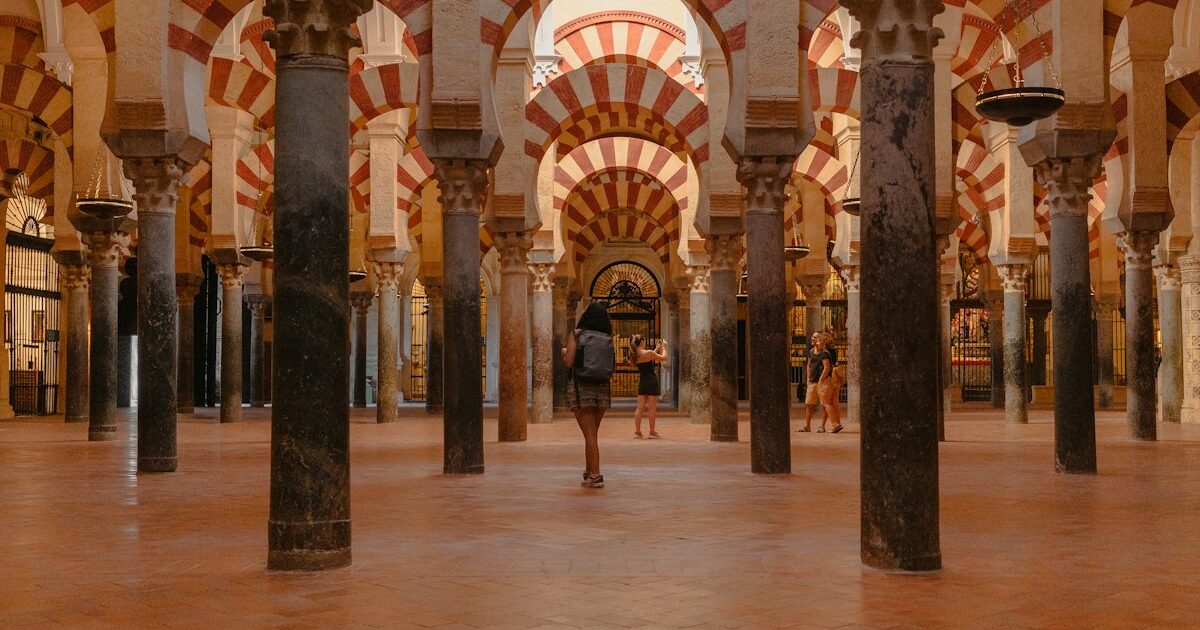
Picture yourself stepping inside—that first jaw-dropping moment. A sea of columns, patterns so intricate they make your head spin, and all that gold calligraphy reaching up like it wants to touch the sky. Back in its heyday, the Mezquita wasn’t just for prayer; it was a statement, a shout to the world about how powerful and magnificent the Islamic empire was.
Architectural Wonders of Cordoba’s Mezquita
Cordoba’s Mezquita looks like a massive treasure chest, just bursting with amazing architecture.
Ready to crack it open and see the goodies inside? Let’s do this!
The Hypostyle Hall: Forest of Pillars
Imagine stepping into a mesmerizing forest… except the trees are hundreds of columns! That’s the Hypostyle Hall, the most iconic part of the Mezquita. Those striped arches—red and white, like giant candy canes—seem to stretch on forever. I remember getting lost in that striped maze when I first visited, and you know what? It was kind of magical.
The Mihrab: A Masterpiece of Islamic Art
The mihrab tells you which way Mecca is, the holy city all Muslims face for prayer. And the Mezquita’s mihrab? Forget stunning; it’s like mind-blowing. Gold everywhere, swirling calligraphy, those crazy-detailed geometric patterns—it’s like someone poured a whole treasure chest of jewels onto the wall.
The Maqsura: The Caliph’s VIP Booth
Okay, imagine this: the maqsura was like the mosque’s own private VIP section, just for the Caliph, the big boss of the Islamic empire. Even more intricate carvings, mosaics that’ll make your eyes pop, arches piled on arches… This was all about showing off—a blinged-out reminder of who was in charge.
Transformation: From Mosque to Cathedral
History can take some wild turns, wouldn’t you agree? Cordoba’s Mezquita story is proof of that!
The Christian Reconquista and Cordoba’s Mezquita Fate
Remember those Umayyad rulers who built the Mezquita? Well, their power didn’t last forever. In the 13th century, Christian forces took Cordoba during the “Reconquista,” a period when Christian kingdoms fought to reclaim Spain from Islamic rule. The Mezquita, once the pride of the Islamic world, faced a dramatic change.
The Cathedral’s Renaissance Heart
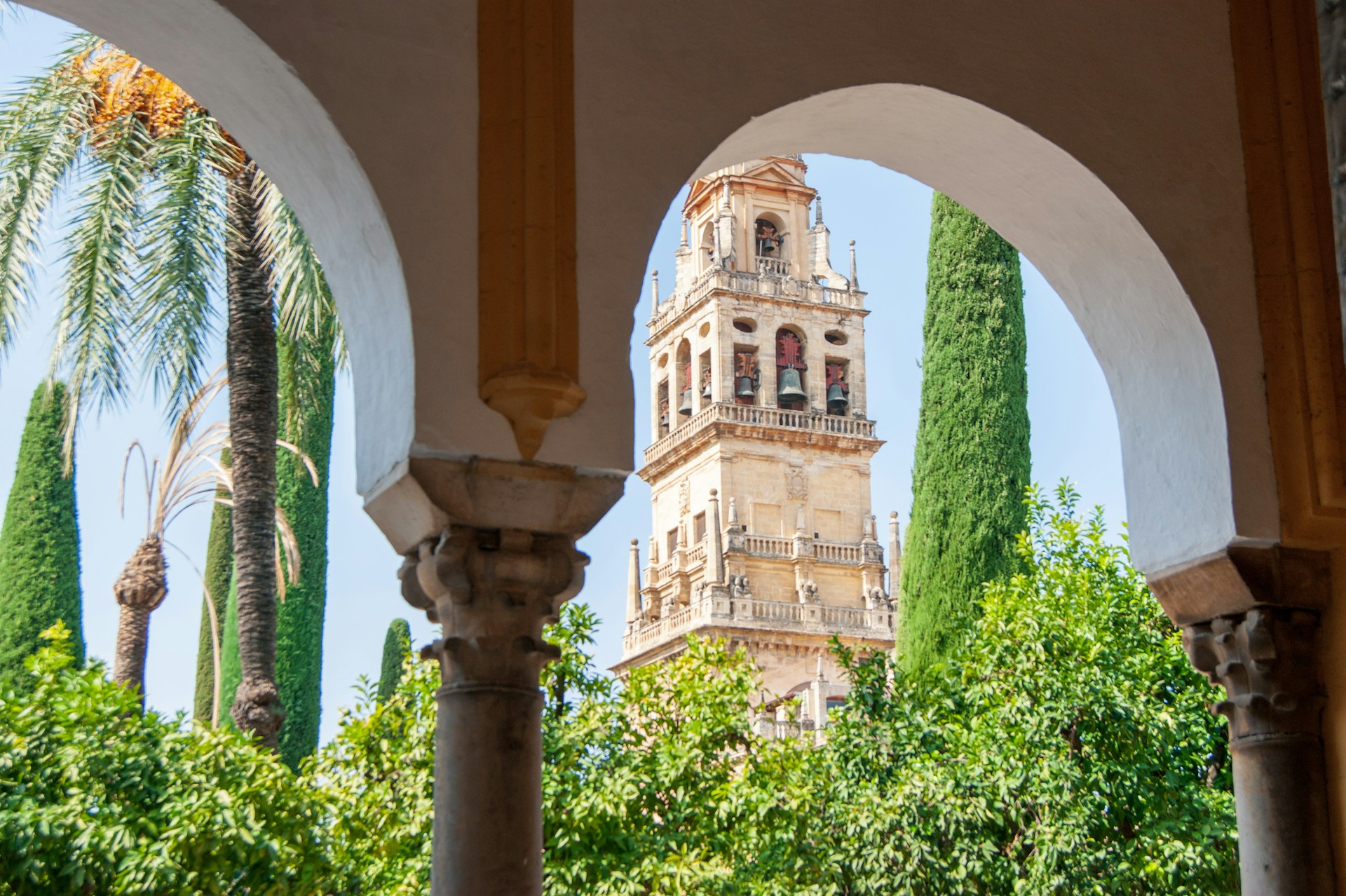
The new rulers could have demolished the mosque. But instead, they did something, well, unexpected. Right smack dab in the middle of Cordoba’s Mezquita, they built a full-on Renaissance cathedral! Imagine those airy Gothic arches and soaring vaults rising among those striped Islamic arches. Talk about a clash of styles!
Blending of Styles: Where Islamic and Christian Art Converge
As weird as it might seem, this mix creates a strange, unique beauty. The Mezquita is more than just this incredible building; it’s like a snapshot of Cordoba’s whole history. You’ve got these cultures clashing, and then, somehow, over the years, they figure out a way to make it work.
Amazing Cordoba
Beyond Cordoba’s Mezquita: Hidden Treasures
Okay, the Mezquita is mind-blowing, but Cordoba has way more up its sleeve! We’re talking about hidden treasures just waiting to be found. Let’s ditch the crowds and hit those charming streets.
The Jewish Quarter (La Judería): History in Every Cobblestone
Forget walking; we’re time-traveling! Judería is this perfectly preserved old Jewish neighborhood. With its narrow little streets and whitewashed houses overflowing with flowers, you’ll feel like you’re lost in this beautiful maze. Gotta find that old synagogue too; it’s a reminder of the amazing community that once lived here.
The Alcázar: Your Fairytale Fix
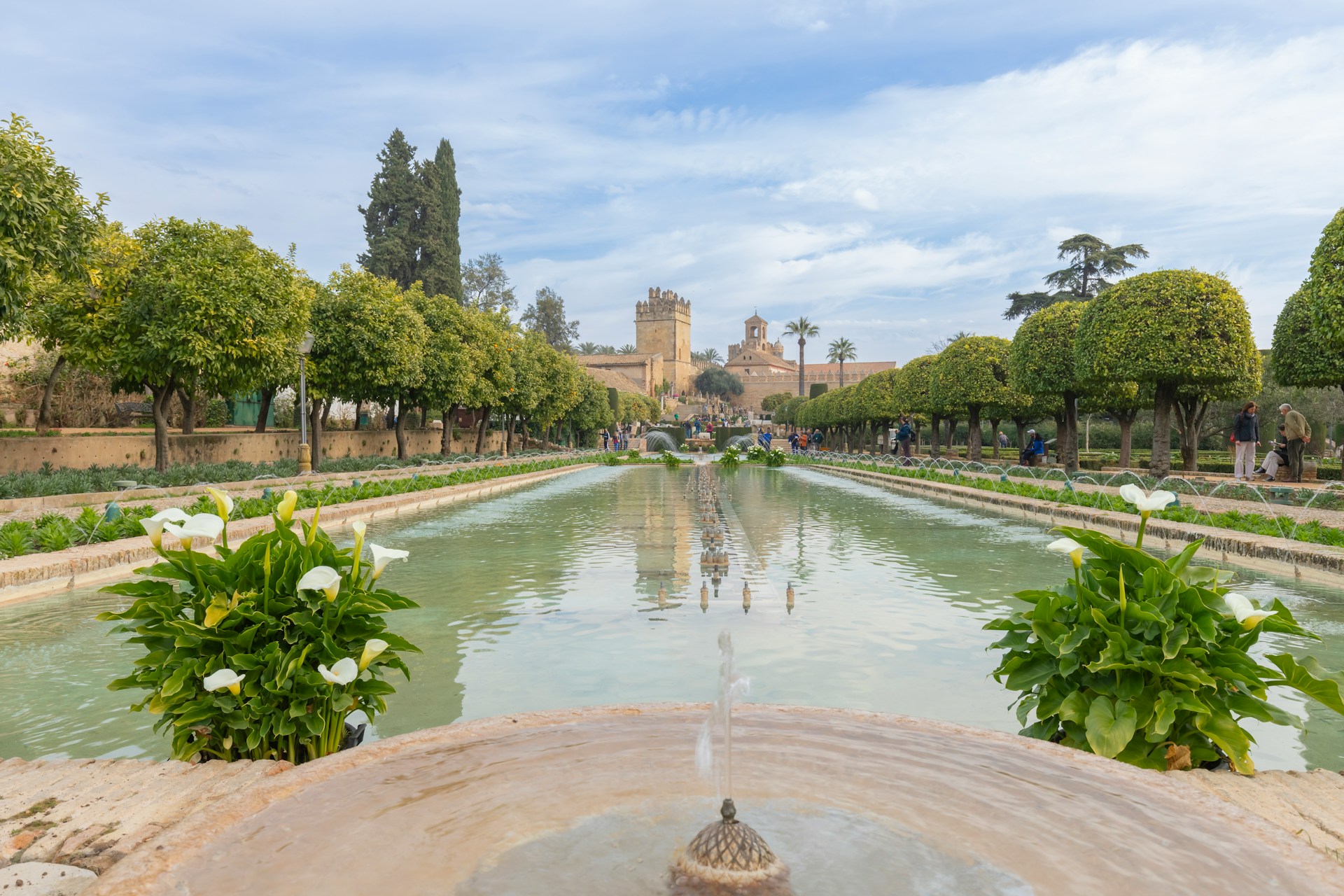
Who hasn’t dreamt of exploring a real castle? The Alcázar is the real deal! It was a fortress for kings, with massive towers and gardens so perfect they look fake. You can bet the views from up there are insane! The Alcázar wasn’t just a pretty palace; it played a role in history. Imagine walking its halls—the same ones where Ferdinand and Isabella made those huge decisions, where Columbus begged for ships to sail into the unknown. You can almost hear the echoes of history, right? Like whispers from another time…
The Roman Bridge: Step Back in Time
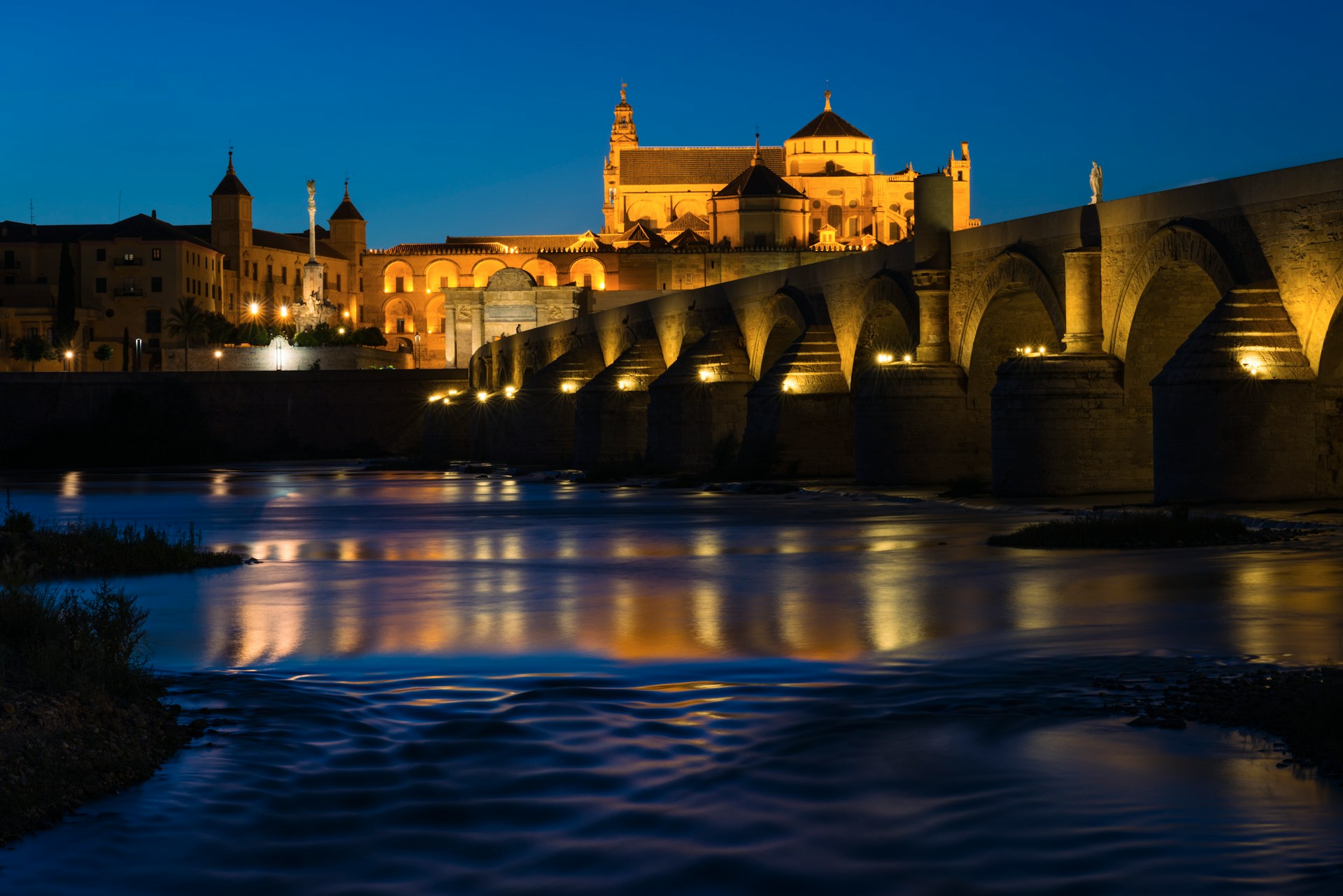
Crossing the Guadalquivir River on Córdoba’s Roman Bridge? Now that’s history you can walk on. Think about all the Roman soldiers who crossed right here centuries ago! It lights up at sunset, all golden and gorgeous—perfect for a chill walk and some amazing pictures. All that exploring is making you hungry. Let’s dive into Cordoba’s food scene next!
Experiencing Cordoba’s Culture
Cordoba is more than just pretty pictures; it’s about those moments that stick with you and get under your skin.
Flamenco: Fire in the Heart of Cordoba
Imagine this: the fierce stomp of feet, a blur of colorful skirts, the raw emotion pouring out of a flamenco dancer… Cordoba’s a great place to catch this passionate art form. Find a little tablao—those intimate flamenco spots—and get ready for something you won’t forget. My first time seeing flamenco? It still gives me goosebumps!
Foodie Paradise: Cordoba’s Flavors Will Surprise You
Cordoba’s where your tastebuds go on vacation! From lively tapas bars to hidden little restaurants, the food here is all about those layers of history. You gotta try salmorejo (that chilled tomato soup that’s way better than gazpacho), flamenquines (trust me, they’re delicious), and anything with that sweet local wine.
Festivals: Dive into Cordoba’s Soul Visiting during a festival?
Lucky you! Cordoba’s all about those flower-filled patios in May and the solemn but beautiful Holy Week processions. It’s like stepping into another time.
Okay, but where should you stay? Picking where to crash is a big travel decision, right? Let’s figure out what fits your vibe:
Best Areas: Convenience or Charm?
Want everything on your doorstep? Stay near the Mezquita and walk everywhere. Want that old-world magic? The Judería (the Jewish Quarter), with its hidden courtyards and twisty little streets, is your jam (even if the walk to the sights is a bit longer).
Hotels, hostels, or apartments? Cordoba’s got you covered, no matter your budget:
- Hotels: fancy historic places, budget options, the whole range!
- Hostels are great for meeting people and saving some cash.
- Apartments: Perfect for longer stays or if you want to feel like a local.
My tip: Book early, especially if you’re visiting during peak season or a festival! Cordoba is popular, and the best places fill up fast.
How to travel to neighboring cities from Cordoba
Cordoba rocks, but you’d be crazy not to miss out on the rest of Andalusia! It’s the perfect jumping-off point, and getting around is super simple. Here’s the breakdown:
Day Trips from Cordoba: Exploring Andalusia
Old charming towns, amazing cities, or even a day at the beach ? You’ve got options! Some popular day trips from Cordoba include:
- Seville: Andalusia’s capital, brimming with energy, stunning architecture (think a gigantic cathedral with a Moorish tower!), and top-notch tapas.
- Granada is home to the breathtaking Alhambra, a palace complex that will make your jaw drop. Get lost in its gardens, courtyards, and intricate Islamic art.
- Carmona: A picture-perfect “pueblo blanco” (white village) perched on a hilltop. Imagine strolling cobblestone streets with the echo of footsteps mingling with the scent of history. Explore an ancient Roman burial ground, then climb high above the city for views that take your breath away.
- Málaga: Looking for a seaside escape? Malaga has beaches, delicious seafood, and the Picasso Museum for art lovers.
Train Connections: Seville, Granada, and Beyond
Cordoba’s train station is super central, making train travel a breeze. Spain’s high-speed trains (AVE) whisk you to Seville in a flash (about 45 minutes!) and Granada is under two hours away. You can even reach Madrid for a longer-day trip if you’re ambitious.
Bus Routes: Expanding Your Andalusian Itinerary
Buses are often a budget-friendly alternative, and they reach smaller towns that trains might not. Do your research beforehand, as bus journeys can be a bit longer than train rides.
Tip: For any of these day trips, consider organized tours if you want to make the most of your time and let someone else handle the logistics!
Cordoba’s Mezquita: A History Date You Won’t Forget
Leaving Cordoba—it’s not like leaving any old place. You’ll take a piece of it with you. That flamenco beat dancing in your head, the scent of orange blossoms you can still almost smell, that “whoa!” moment when you first saw those Mezquita arches—it all sticks with you.
Some places just get under your skin, you know? Like they become part of your story.
Cordoba’s this reminder of how time has a way of layering itself, folding over and over. There’s so much history here, all mixed up in a beautiful way. Maybe it’s the art that gets you, the amazing food, or just the feeling of getting lost down those old streets… Cordoba has its own way of getting under your skin.
I hope this guide makes you want to see Cordoba for yourself. Who knows, maybe years from now, you’ll be the one with stories about exploring the Mezquita, getting lost in the Judería, and falling in love with this city’s spirit.
Hungry for more Spain? We’ve got travel blogs on Barcelona, Seville, Valencia, and Granada—the whole list!
Thanks for exploring with me!
