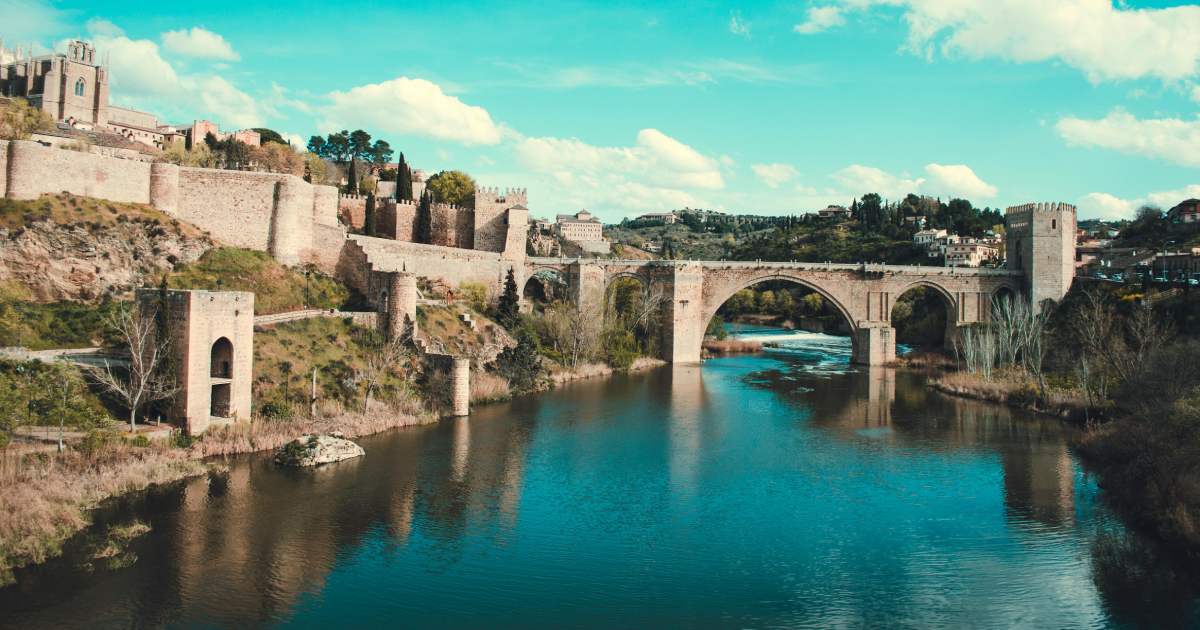
Located above the Tagus River, Toledo is a timeless city that captivates you.
Some people call Toledo a breathing museum and they say that for a reason.
Raw stone, medieval walls and cathedrals are some parts of her beauty.
Why Toledo Still Captivates Modern Travelers
Toledo is a combination of everything and has many things to offer. For art lovers, there is El Greco’s touch all over the city. For food lovers, the marzipan desserts are just phenomenal. Let’s explore together what this city has to offer.
The History of Toledo: A City Woven Through Centuries
Islamic, Jewish, and Christian Influence: A True Cultural Mosaic
Toledo is known as the city of the three cultures. Many years ago Muslims, jews and christians lived at the same time in the same region. But they weren’t just coexisting. They were sharing ideas, language and architecture. It is basically what Toledo is today.
A living example is the Mezquita del Cristo de la Luz. This was primarily a mosque that was later turned into a church. Τhe horseshoe arches are right alongside christian art.
Nowadays we would call it a “cross-cultural collaboration,” but back then, it was simply life.
Toledo’s Golden Age: When Swords and Scholars Ruled
Fast forward to the 13th century, and Toledo was basically the New York City of medieval Spain.
Toledo became a world-famous hub for translation. Jewish, Muslim, and Christian scholars translated ancient Greek and Arabic texts into Latin. Because of them, Europe rediscovered forgotten knowledge in medicine, astronomy, and philosophy.
And let’s not forget sword-making. Since Toledo is known for its steel it is only fair that you experience an authentic espada toledana. Today, craftsmen keep that legacy alive. They are mostly known as art and less like weapons.
Exploring Toledo’s Ancient Streets: A Step Back in Time
Calle del Cardenal Cisneros: A Walk Through History
Calle del Cardenal Cisneros is one of the oldest streets in Toledo. It is located right behind the grand Toledo Cathedral and it feels like a trip to old Toledo. There is history everywhere and the architecture is one of a kind.
Along the way, you’ll spot old plaques, hidden courtyards, and little artisan shops selling traditional swords and jewelry. I guess we are starting off strong with those souvenirs.
The Jewish Quarter: Narrow Lanes Full of Secrets
The Jewish Quarter is where Toledo gets alive. Jewish scholars, merchants, and families lived, prayed, and thrived centuries ago. Landmarks like the Synagogue of El Tránsito and the Sephardic Museum are some of the monuments that shaped Spain’s identity.
Zocodover Square: The Beating Heart of Old Toledo
Have you ever been to Toledo if you haven’t visited the Plaza de Zocodover? Zocodover was the beating heart of the city for many years. It was the place where everything used to happen. From markets and fairs to public trials.
Zocodover’s spirit is still alive and is a preferred place by both tourists and locals. There are many coffee shops where you can enjoy a hot cup of coffee. All that while imagining what it was like back then.
Must-Visit Monuments and Landmarks in Toledo
Besides her beautiful streets full of history, Toledo has important monuments that are worth visiting.
Toledo Cathedral: Gothic Glory and Grandiosity
Toledo cathedral is known as one of the most important Gothic structures in Spain. The cathedral was built between the 13th and 15th centuries and the details are mind blowing.
The outside is magnificent and draws your attention instantly. But the inside is something else.
Intricate carvings, soaring ceilings that seem to touch the heavens, and stained glass windows that jewel the interior.
When you visit you should definitely choose a guided tour. That way you will learn the significance of the cathedral and other interesting information.
Some of the things that I was so happy to discover were the El Transparente: a baroque explosion of sculpture and light inside the cathedral and the incredible Sacristy: filled with pieces from El Greco, Goya, and Velázquez.

Alcázar of Toledo: Fortress of Legends
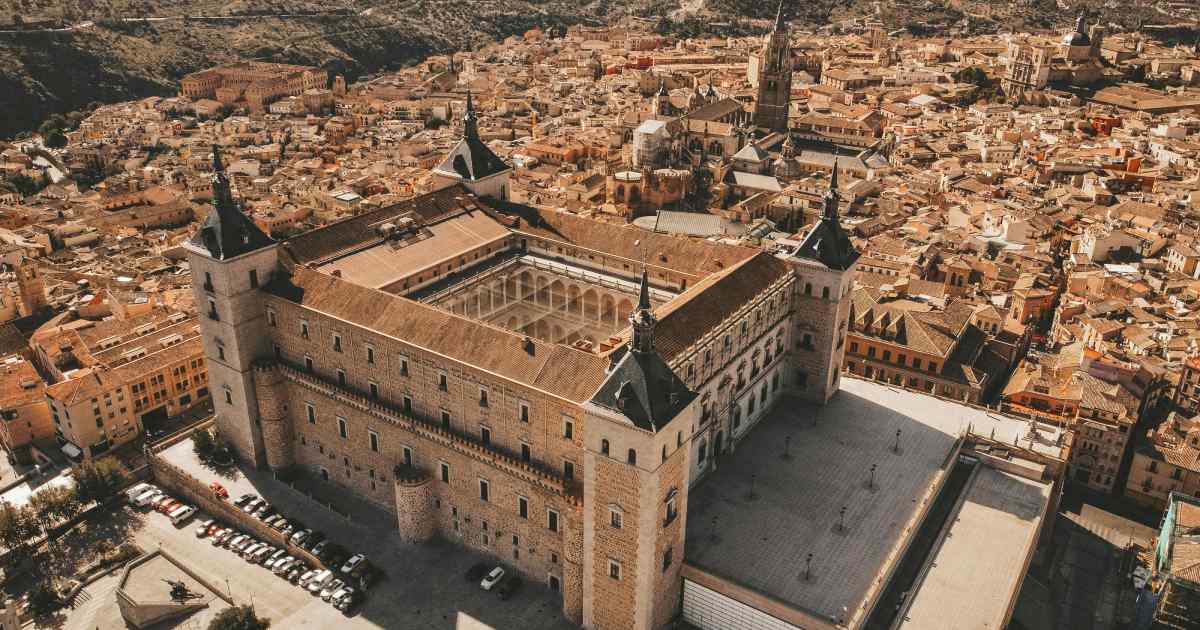
Alcázar of Toledo sits high on the city’s hill like some king watching over his kingdom. Originally this was a Roman palace, rebuilt and fortified through the centuries. During the Spanish Civil War, the Alcázar became a symbol of resistance after a dramatic battle.
Inside the Alcazar, is hosted the Army museum Museo del Ejército. The exhibits inside show medieval weapons, military uniforms and more that just showcase how deeply the Alcázar’s story intertwines with Spain’s national identity.
This history is represented exactly the way everything happened without sugarcoating anything.
Insider Tip: Step outside onto the terraces. The panoramic views of Toledo’s rooftops and the winding Tagus River are incredible.
Monastery of San Juan de los Reyes: A Stone Tribute to Power

The Monastery of San Juan de los Reyes was built by the Catholic Monarchs, Ferdinand and Isabella. This monastery was their victory trophy after the Battle of Toro. I don’t think anyone can comprehend the beauty and the majesty of this place.
The Gothic cloisters are unreal. The architecture is absolutely phenomenal and with such a small admission fee I wouldn’t miss it for the world.
Hanging along the outer walls, you’ll see actual iron shackles, symbols of the Christians liberated from Moorish prisons during the Reconquista. It’s a chilling but powerful reminder of how passionate people were about religion, politics, and identity back then.
Art and Culture: Unveiling Toledo’s Artistic Treasures
El Greco and His Eternal Mark on Toledo
El Greco is practically a part of Toledo’s DNA. One of his most famous paintings is The Burial of the Count of Orgaz inside the Church of Santo Tomé. But who was he?
El Greco (born Doménikos Theotokópoulos in Crete) moved to Toledo in the late 16th century and made it his home. Many of his art works have elongated figures, swirling skies and intense emotions.
Museums Not to Miss: Museo del Greco and Beyond
Museo del Greco. The relationship between Toledo and El Greco was something like a win-win situation. Toledo undoubtedly became richer but El Greco was inspired by her in many aspects.
On top of that the museum is tucked away in a beautiful old house and garden, which adds to the overall experience.
But don’t stop there. Make time for the Santa Cruz Museum. This museum is housed in a former hospital which makes it already interesting. The museum features a mix of fine art, archaeology, and religious artifacts.
Also, the Victorio Macho Museum, dedicated to one of Spain’s best sculptors, gives you killer views of the river too.
Local Artisan Crafts: Damascene Metalwork and Ceramics
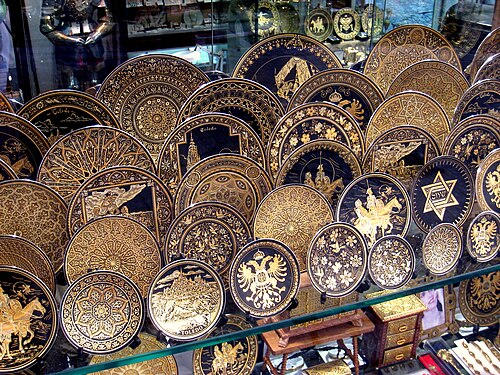
And now the best part for art lovers and jewellery collectors.
Damascene metalwork (or Damasquinado) is an ancient technique where artisans inlay gold and silver into blackened steel to create intricate designs. You might have seen swirling floral patterns and tiny, dazzling scenes. The tradition dates back to the Moors, and today, Toledo’s craftsmen still create some of the best in the world.
It is honestly very interesting how this was created in the first place and how much it has evolved since then.
And of course you can not forget Toledo’s famous ceramics. Bright, colorful, often painted with scenes from daily life or religious stories. It offers a plethora of designs and colors that do not disappoint.
Top Culinary Experiences in Toledo: A Taste of the Past
Many people believe that a place speaks to you through their food culture. And I 100% agree on that. Not only you understand a place and its influences better but you also taste new things.
Iconic Dishes: Venado, Mazapán, and Carcamusas
Let’s kick it off with the stars of the show — Toledo’s iconic dishes that you have to try if you want the full experience.
Venado (Venison): Now this might not be a very common dish but it is very tasty.. The main ingredient is deer meat and it is mostly slow cooked. It is cooked in a rich red wine sauce and you can have it with anything on the side. Always pair it with a good glass of red wine.
Mazapán (Marzipan): Marzipans are very famous and worth the try. It is basically almond turned into a paste. You can find it chocolate covered or with other flavours to match your taste. Legend has it that it was invented by nuns during a famine and has been a staple since then. Try to find local bakeries that make them in a traditional way.
Carcamusas: This dish deserves its own standing ovation. Think tender pork stewed with tomatoes, peas, and a spicy kick, usually served in a clay pot. It is the definition of comfort food especially if you visit during winter.
Best Restaurants and Traditional Taverns
There are many restaurants and traditional taverns to choose from in Toledo. Here I gathered some recommendations based on their location and reviews.
Adolfo Restaurant: Set inside a 14th-century house, this spot mixes history with haute cuisine. It is a restaurant that offers an unforgettable experience.
The architecture, the dishes, everything screams high gastronomy and quality. I highly recommend making a reservation beforehand since their opening hours are limited.
La Abadía: If you want something more affordable and more of a tavern vibe then this is the choice. The decoration is stunning, with interior lights making such a beautiful atmosphere. Their carcamusas and venado dishes are next-level, and their local wine list is long.
La Orza: If you are staying near the Jewish Quarter, La Orza is one of those places where every bite feels crafted with love. The must try here is the venison stew paired with a bold red wine.
Taberna El Botero: If you visit Toledo this place is a must visit. The interior is very traditional and offers a different atmosphere. It offers many dishes that will match your taste.
Also their wine collection is remarkable and they mix a killer craft cocktail. Ideal after a long day of sightseeing.
Where to Stay in Toledo: The Best Areas for a Medieval Escape
1. Casco Histórico (Old Town) – Best for First-Timers and History Lovers
If it’s your first time in Toledo then you’ll want to stay inside the walls, in the Casco Histórico. This is the historic center of Toledo that offers all the things you want to see.
Why should I stay here?
- Perfect if you prefer walking around the city. The cathedral, Jewish Quarter, museums and shops, are all close.
- Busy during the day since it is a popular option for visitors.
2. Jewish Quarter (La Judería) – Best for Romantic and Quieter Stays
Tucked into the southern part of the old city, the Jewish Quarter offers a more relaxed and romantic feeling.
Why should I stay here?
- This area is perfect for couples, artists and families who need a calmer experience
- Close to sights, like the Synagogue of El Tránsito and the Sephardic Museum.
3. Around Zocodover Square – Best for Convenience and Nightlife
If you like being in the heart of everything you should choose the Plaza de Zocodover.
This is Toledo’s main square. It is full of markets, bars and restaurants.
Why should I stay here?
- Perfect if you want easy transport links, quick access to taxis, buses, and tons of cafes right outside their door.
- Great spot if you’re planning to take a day trip or two (like to Consuegra or Madrid).
4. Across the River – Cerro del Emperador Area – Best for Views and Relaxed Luxury
If you are a lover of panoramic views and sunsets stay across the Tagus River in the Cerro del Emperador.
Why should I stay here?
- It is ideal if you are looking for a calmer vacation and have the ability to rent a car.
5. Santa Bárbara and the Train Station Area – Best for Budget Travelers and Practical Stays
If you’re traveling on a budget you might want to stay near the train station.
Why should I stay here?
- Hotels and guesthouses here are usually cheaper than inside the historic center.
- Super convenient if you’re hopping on an early train to Madrid or elsewhere.
How to Travel to Neighboring Cities from Toledo
Toledo makes a killer base for day trips. It has many connections to nearby destinations that make it ideal if you want to combine two places.
High-Speed Trains: Day Trips to Madrid
The Toledo train station offers a high speed train that gets you to Madrid in less than an hour. If more specific in about 33 minutes.
Madrid: Perfect for a quick injection of big-city energy. You have museums, shopping, nightlife, all just a half-hour away. It is very easy to combine and stay for a couple of days.
Connections: From Madrid’s Atocha Station, you can catch high-speed trains to Seville, Córdoba, Valencia, and even Barcelona if you’re feeling ambitious.
Pro Tip: Book your RENFE train tickets online ahead of time to score cheaper fares and avoid last-minute stress at the station.
Renting a Car: Scenic Drives Through Castilla-La Mancha
Another great option that offers versatility and freedom is renting a car. If you choose the best places to visit you will have the best sceneries and it is ideal if you love road trips. Some of the closest destinations are:
Consuegra: Consuegra is about 45 minutes from Toledo. This city is known for those iconic white windmills made famous by Don Quixote.
Campo de Criptana: Another dreamy windmill town, slightly farther out but worth it.
Tembleque: Hidden gem with one of Spain’s most beautiful traditional plazas.
Organized Tours: Effortless Excursions to Segovia, Ávila, and Cuenca
Another great option that many people prefer is organized tours. The advantages are multiple. Is like being a kid again and your parents take you somewhere with zero stress and responsibilities. Organized day tours from Toledo are gold and highly recommended.
Some of the best destinations and most common organized tours are to cities like:
Segovia: Marvel at the mind-blowing Roman aqueduct and the Disney-like Alcázar castle.
Ávila: The legendary medieval city walls, the best preserved in all of Spain.
Cuenca: Visit the famous “Hanging Houses” (Casas Colgadas) at the verge of the cliffs. Is absolutely breathtaking and makes you think of nature’s glory.
Tour Tip: Look for small-group tours. They’re a bit pricier but you have the fullest experience. Also, guides offer valuable information that make the troop much more interesting.
Conclusion: Embrace the Enchantment of Toledo
Many Spanish cities are so overcrowded that they have lost their spark. The true deal is visiting places like Toledo. Toledo offers a complete experience that allows you to know Spain and learn more about her history.
Toledo deserves more than just a glance. It deserves your curiosity, your wandering feet, and your late-night conversations over a glass of local wine.
