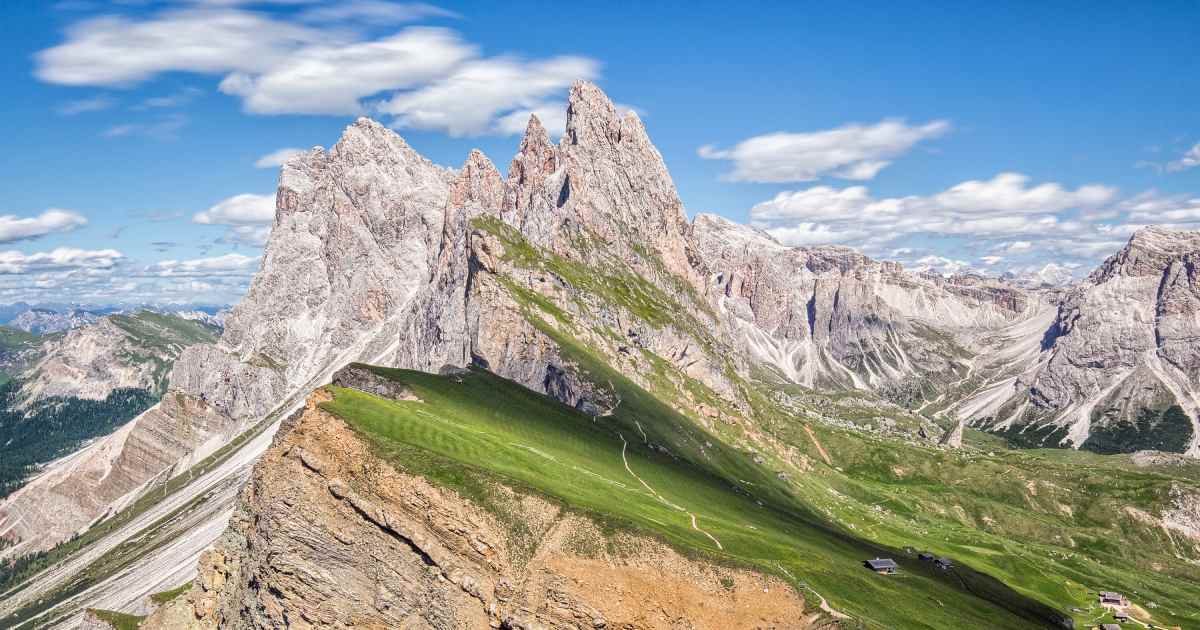
The Italian Dolomites are a dream for anyone who loves mountains, open air and the sound of nature.
If hiking in the Dolomites is on your list, this guide covers everything: where the Dolomites are, how to reach them, the best hikes, and where to stay.
But let’s start with the basics first.
Where Are the Dolomites? Understanding the Italian Dolomites Location
The Dolomites sit in northern Italy, close to South Tyrol, Trentino, and Belluno. Look at a Dolomites Italy map and you’ll see the range forming a rugged arc east of Bolzano and north of Venice. The main valleys — Val Gardena, Alta Badia, and Cortina d’Ampezzo — serve as hubs for hikers. Each offers easy access to trails, cable cars, and those postcard views that made this region famous.
If you’re wondering where are the Dolomites in relation to Italy’s big cities, they’re roughly a four-hour drive from Milan, three from Venice, and two from Verona. The nearest airports are Venice Marco Polo, Verona Villafranca, and Innsbruck in Austria. Once you’re here, the best way to explore is by car, which lets you hop between valleys and trailheads at your own pace.
How to Get to the Dolomites: Milan to Dolomites and Other Routes
Getting from Milan to the Dolomites is straightforward. Drive northeast on the A4 highway toward Verona, then head north toward Bolzano or Cortina d’Ampezzo depending on your plan. Trains run from Milan to Bolzano, and from there you can rent a car or take local buses. If you’re coming from Venice, the route to Cortina is shorter and offers mountain views almost the entire way.
Public transport works between main towns, but many trailheads start in remote valleys, so a car is handy. Most villages have paid parking near cable cars or trail entrances. Roads are steep but well maintained, so the drive is part of the adventure.
Best Time for Hiking in the Dolomites Italy
Hiking season runs from June to late September. During these months, trails are clear of snow and the rifugi — mountain huts — are open. July and August bring the best weather but also the biggest crowds. For quieter paths and lower prices on Dolomites hotels, visit in June or September. May and October can still be lovely, though some high-altitude routes may close because of lingering snow or early storms.
Dolomites Italy Map: Top Hiking Areas in the Italian Dolomites
The Dolomites cover more than 140,000 hectares, so a map is essential. The most popular hiking areas include:
- Val Gardena and Seceda: Known for wide ridgelines and sweeping views. Trails start from Ortisei and Selva.
- Cortina d’Ampezzo: The “Queen of the Dolomites” and home to the Tre Cime di Lavaredo and Lago di Sorapis trails.
- Alta Badia and Val di Fassa: Ideal for scenic, family-friendly hikes with easy access to rifugi.
- Alpe di Siusi: Europe’s largest alpine meadow with gentle paths and endless views.
Distances between valleys aren’t huge, but narrow mountain roads can slow travel. It’s smart to base yourself in one or two regions rather than try to see them all in a few days.
Must-Do Day Hikes in the Dolomites
Day hikes give you a taste of the Dolomites without heavy packs or long transfers. Here are the classics:
- Tre Cime di Lavaredo Loop: The most famous Dolomites hike. A 10-kilometer loop circles three towering peaks with stunning views in every direction.
- Lago di Sorapis: A turquoise alpine lake reached by a moderate three-hour hike near Cortina d’Ampezzo.
- Seceda Ridgeline: Take the cable car from Ortisei and walk along a knife-edge ridge with endless photo spots.
- Cinque Torri: A short loop with World War I tunnels and rock formations shaped like towers.
- Alpe di Siusi Panorama Trail: Wide meadows and gentle gradients — perfect for families or first-time hikers.
Best Multi-Day Treks and Dolomites Hut to Hut Hiking
Hut-to-hut hiking in the Dolomites is one of Europe’s great mountain experiences. You hike by day, eat homemade pasta at night, and sleep in cozy mountain huts. Each morning, a new view waits over breakfast.
- Alta Via 1: The most famous route, stretching about 120 kilometers from Lago di Braies to Belluno. It takes around 8–10 days and suits most hikers with moderate experience.
- Alta Via 2: Rougher and more remote. It crosses higher passes and demands good fitness and mountain sense.
- Dolomiti di Brenta Trek: A circular trail in the western Dolomites, less crowded but equally scenic.
Rifugi along these routes serve hot meals and often have showers and Wi-Fi. Book early if you’re hiking in July or August, as beds fill fast.
Rifugi and Mountain Huts in the Dolomites
Think of rifugi as part hostel, part restaurant, part mountaintop retreat. They make multi-day hiking in the Dolomites possible without carrying a tent. You’ll find dorm rooms or small private rooms, hearty dinners, and sunrise coffee with a view.
Bring cash for small expenses, a sleeping bag liner, and earplugs. Rifugio Lagazuoi, Rifugio Locatelli, and Rifugio Alpe di Tires are among the most famous, and all sit in spectacular locations.
Where to Stay in the Dolomites: Best Dolomites Hotels and Mountain Retreats
If you prefer comfort after a day on the trails, the Dolomites have excellent hotels. Stay in Cortina d’Ampezzo for easy access to Tre Cime and Lago di Sorapis. Choose Val Gardena for the Seceda ridge and Alpe di Siusi. Both towns offer a mix of mountain lodges and luxury resorts.
For a blend of modern design and nature, the Forestis Dolomites Hotel in South Tyrol is hard to beat. Perched at 1,800 meters, it offers panoramic spa views, forest trails, and fine dining with a local twist. Many Dolomites hotels provide half-board options, which is great value if you plan long hiking days.
Planning Your Hiking Dolomites Italy Itinerary
Here’s how to shape your trip:
- 3-Day Itinerary: Base in Val Gardena. Hike Seceda and Alpe di Siusi, then take a scenic drive to Lago di Carezza.
- 5-Day Itinerary: Add Cortina d’Ampezzo and the Tre Cime di Lavaredo loop. Stay in a rifugio one night for the sunrise views.
- 7-Day Itinerary: Combine day hikes with a short section of the Alta Via 1 or 2 for a taste of hut-to-hut life.
Plan driving times carefully. Valleys may look close on the map but take longer to reach because of winding mountain roads.
Hiking Safety in the Dolomites
The Dolomites are well marked and safe for most hikers, but the weather can change quickly. Afternoon storms are common in summer. Start early, carry a light rain jacket, and check forecasts daily. Red-and-white trail markers (CAI signs) make navigation simple, but offline maps help in fog.
For high routes or via ferrata climbs, consider hiring a guide. Local experts know the terrain and can add stories about history, geology, and wildlife you’d otherwise miss.
Gear for Hiking in the Dolomites Italy
Packing light is key. Good hiking boots or trail shoes, breathable layers, sun protection, and trekking poles will cover most hikes. Carry at least two liters of water and snacks since some trails have long gaps between huts. Download offline maps or use apps like Komoot or Maps.me matched to your Dolomites Italy map.
Photography in the Italian Dolomites
Few places match the Dolomites for photography. For sunrise, head to Seceda or Alpe di Siusi. For sunset, Tre Cime di Lavaredo and Cinque Torri glow pink and orange as the sun dips. Drones are allowed in certain areas but check local rules before flying. Always pack extra batteries — the scenery will keep you shooting.
Local Food and Culture in the Dolomites Italy
Hiking in the Dolomites isn’t just about the views. It’s also about what’s on your plate at the end of the day. The region mixes Italian, Austrian, and Ladin influences. Expect dishes like canederli (bread dumplings), speck (smoked ham), polenta, and apple strudel. Pair them with local wine or a cold beer and you’ll recover fast from any trail.
Small villages often host summer festivals where locals wear traditional dress and play mountain music. Even if you don’t understand the language, the hospitality feels universal.
Responsible Hiking in the Dolomites
The Dolomites are fragile. Stay on marked paths to protect wildflowers and soil. Carry your trash back to town and avoid loud music on trails. Many rifugi and Dolomites hotels now focus on sustainability — support those that recycle, use local food, and respect water limits. Every small choice helps keep these mountains pristine.
Final Thoughts: Why Hiking Dolomites Italy Belongs on Your Bucket List
The Italian Dolomites have everything a hiker could want: dramatic peaks, welcoming people, and trails for every level. You can leave Milan in the morning and watch sunset at Tre Cime that same evening. Few regions in the world blend comfort and wilderness so perfectly. Once you hike here, you’ll understand why so many travelers return again and again.
